Behavior Change for Low-Carbon Energy Access Toolkit
SUSTAINABILITYCLIMATE ACTION
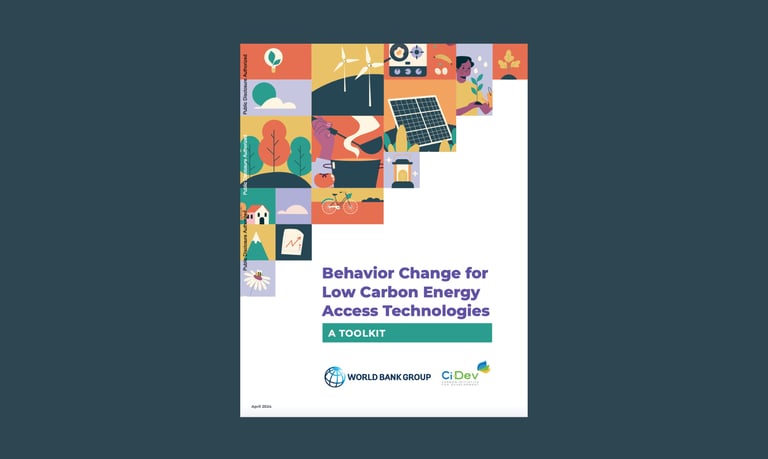
This toolkit helps development practitioners and policy designers apply behavioural science to clean energy programs, such as those promoting solar power or efficient cookstoves, so they can boost adoption and sustained use in underserved communities.
Created by:
World Wide Fund for Nature (WWF), One Planet Cities programme (2022).
What’s inside:
A playbook for city policymakers built around WWF’s Save Nature Please behaviour-change framework. It guides officials through defining target behaviours and audiences, diagnosing barriers and motivations, selecting behaviour change levers, and pilot-testing interventions.
The guide highlights six core behavioural levers, adapted from Rare’s research: inform (education), social influence, emotional appeals, incentives, choice architecture, and regulation. It also integrates the EAST framework, making climate-friendly actions Easy, Attractive, Social, and Timely.
Practical examples show how infrastructure alone (like building bike lanes) is not enough; citizens must also be nudged to use it through campaigns, defaults, or real-time feedback.
Related Behavioural Design Toolkits
Behavioural Design Toolkits ©2026
A curated library of behavioural science and design toolkits to help you understand and shape human decisions.
Get the latest in your inbox
Subscribe to our newsletter